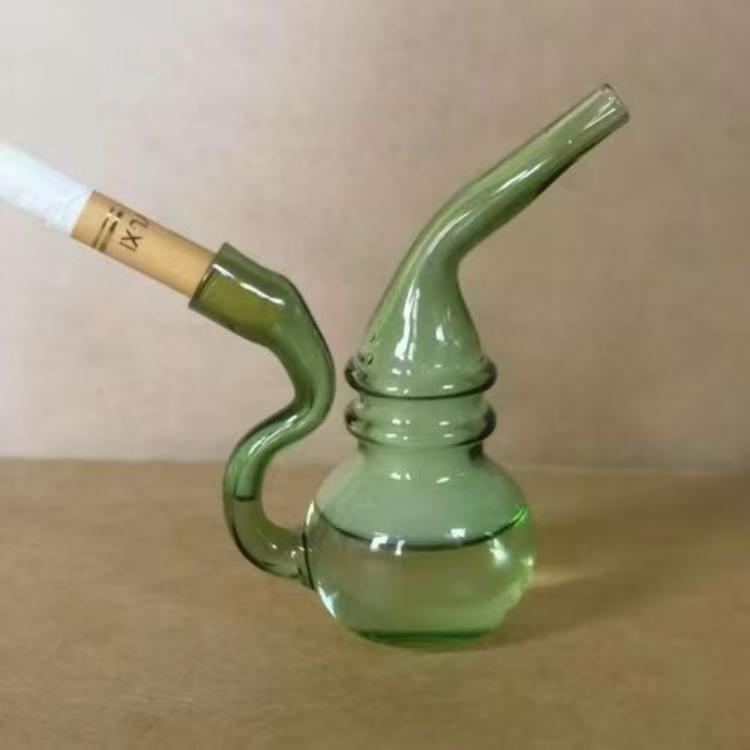
The hookah market is undergoing a material revolution. Valued at approximately $3.2 billion in 2024 and projected to reach $5.9 billion by 2034, the industry is shifting decisively away from plastic and toward glass. Glass hookahs now dominate the market, holding about 50% market share due to their aesthetic appeal and quality.
The reasons are straightforward. Plastic hookahs and acrylic bongs pose real concerns—cleaning them often involves abrasives that wear away inner walls, releasing microplastics. Plastic also degrades when exposed to common cleaning solutions like isopropyl alcohol. Glass, by contrast, doesn't react with water or shisha juice, leaves no chemical residues, and is far easier to clean thoroughly. Residue buildup—one of the biggest sources of harsh smoke—simply doesn't accumulate the same way.
Today's glass hookah pipes are engineered from borosilicate glass, which withstands thermal shifts from -20°C to 280°C without cracking or clouding. Proper annealing ensures thermal stability, preventing spontaneous cracking or bubble formation under repeated use. The transparent body isn't just for show—it lets users see the water filtration process in action, adding a sensory dimension that plastic simply cannot replicate.
The shift extends to glass smoking accessories as well. Glass components, especially artisanal designs, now account for over 60% of total hookah exports. In China's Anhui Province, the town of Shiliang has leveraged its traditional art glass foundation to develop a distinctive hookah production sector, with products primarily exported to the Middle East and Europe. Manufacturers are investing in advanced production techniques and strict quality controls, while lounges increasingly prioritize premium glass components for both hygiene and visual appeal.
The message is clear: plastic is out. Glass is in. And with visible quality becoming the new standard, consumers and lounge operators alike are upgrading—not just for aesthetics, but for a cleaner, more transparent smoking experience.