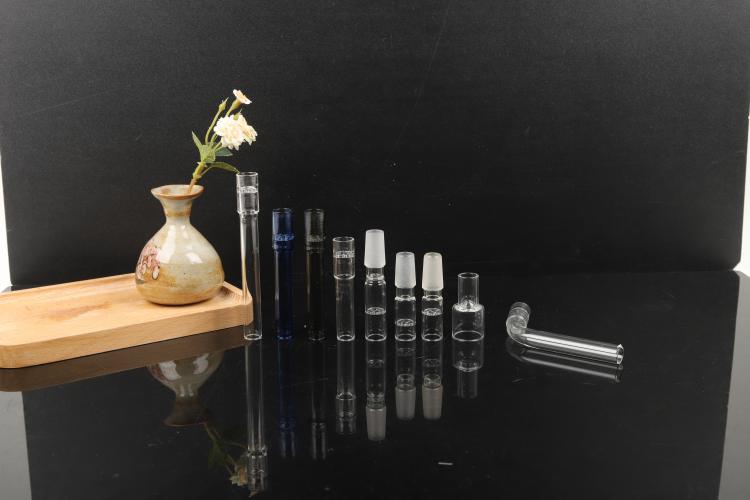
A newly published industry whitepaper has distilled the complex regulatory landscape for glass aromatherapy tube production into six core quality benchmarks, as manufacturers face mounting pressure to certify food-grade compliance across multiple export markets.
The whitepaper, released by a Shanghai-based compliance consultancy, addresses a category that sits at the intersection of wellness, home fragrance, and smoking accessories. Glass aromatherapy tubes, glass hookah bases, and glass hookah pipe all fall under the same regulatory umbrella: any glass article intended to come into contact with consumable substances—whether essential oils, flavored tobacco, or food ingredients—must meet stringent food-contact material standards.
China's GB 4806 series forms the foundation for domestic production. GB 4806.5-2016, the national food safety standard specifically for glass products, mandates that manufacturers use raw materials free from harmful substances such as heavy metals and toxic additives. The overarching GB 4806.1 establishes three safety principles: migrated substances must not endanger health, alter food characteristics, or impart technical functions. In March 2025, China's National Health Commission issued three new testing standards and revised two existing ones under this framework.
U.S. FDA requirements are equally critical for exporters. Glass components must comply with FDA CPG 7117.06 and 7117.07, which set permissible limits for lead and cadmium release from glass, ceramic, and enamelware. Industry sources confirm that leading hookah manufacturers now demand full transparency on raw material sourcing and third-party test reports verifying the absence of lead, cadmium, or other hazardous substances.
EU Regulation (EC) No. 1935/2004 establishes the principle of inertia: materials must not transfer constituents to foodstuffs in quantities that could endanger human health. Glass is explicitly listed among the 17 material categories covered. Additionally, ISO 7086 specifies permissible limits for lead and cadmium release from glass hollowware intended for food contact. Compliance with ASTM E438 for borosilicate glass ensures thermal shock resistance and clarity, while EN 1388-2 addresses metal release from silicate surfaces.
For manufacturers producing glass aromatherapy tubes alongside glass hookah pipes, the message is clear: food-safe certification is no longer optional. As one compliance officer put it, "The standard isn't just about passing a test—it's about building a system that ensures every tube, every pipe, every base leaves the factory safe."